We are currently living through a state of permanent, low-grade background unease. Global systems feel opaque, economic outcomes feel detached from personal effort, and the algorithms that curate our lives are intentionally non-transparent. In this climate, the brain doesn't just tolerate uncertainty; it begins to starve for it—provided that the uncertainty is bite-sized, contained, and above all, voluntary.
Seeking uncertainty on purpose isn't a personality flaw or a reckless impulse. It is a coping mechanism. When the world at large feels like a chaotic, unplayable game, we retreat into systems where risk and reward are clearly delineated.
Think of it like a sandbox: You wouldn’t want to be trapped in a wildfire, but you might enjoy the visceral, controlled challenge of building a fire in a stone pit on a beach. Both involve flames, but one is a threat to your existence, and the other is an activity you can extinguish when you decide you're done.
The Shift from Chaos to Structure
There is a fundamental difference between the anxiety-inducing uncertainty of modern life and the structured uncertainty of digital environments. Real-world uncertainty is infinite; it has no rules, no boundaries, and no clear path to a "win." It is the fog of war.
Structured uncertainty, however, is a product of design. It relies on a closed loop where the odds are visible, if not favorable. This is where the distinction between "choice" and "design pressure" becomes vital. If you find yourself gravitating toward high-stakes digital experiences, don’t flatter yourself by calling it a pure, unadulterated "choice." You are operating within an environment designed to make the *act* of taking a risk feel like the most rational thing you could possibly do at that moment.
The designers of these platforms know that the human brain hates a vacuum. If they can provide a vacuum—a gap between an action and a result—and fill it with a calibrated amount of risk, they can capture your attention indefinitely.
Tools of the Trade: Frictionless Risk
To understand why this is so effective, we have to look at the specific tools currently dominating the digital landscape. These aren't just gadgets; they are architectural choices meant to lower the cost of entry for uncertainty seeking.
Mobile-Friendly Interfaces
The ubiquity of mobile-friendly interfaces has turned "risk and reward" into a commodity accessible in the ten-second gap between boarding a subway and walking to your desk. By stripping away friction, these interfaces remove the "cooling off" period that used to define traditional risk-taking.
- Reduced Cognitive Load: By simplifying the visual display, the platform hides the complexity of the risk, focusing your attention solely on the reward. Temporal Compression: You can experience a full cycle of risk—from anticipation to outcome—in the time it takes to wait for an elevator. Physicality: The touch-screen interaction provides a tactile, albeit digital, sense of agency. You aren't just watching a risk unfold; you are triggering it with a swipe.
Live Dealer-Led Experiences
Perhaps the most fascinating evolution is the return to "live" components in digital spaces. Live dealer-led experiences are essentially trust-hacks. They use human presence to simulate fairness.
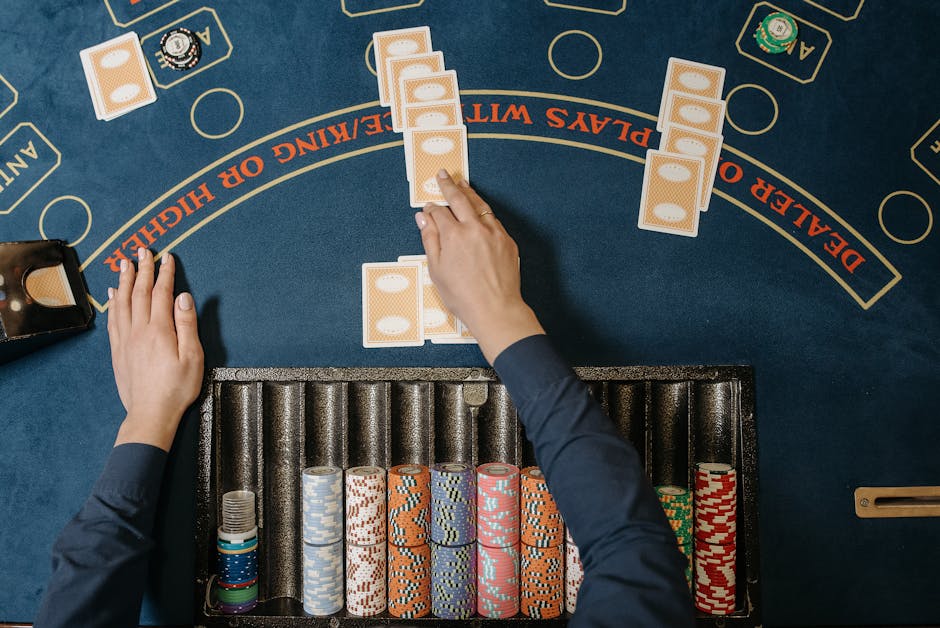
When you participate in an experience moderated by a live human, the platform is effectively leveraging our biological predisposition to trust social cues. Even if you intellectually know that the game is governed by a random number generator or pre-set probabilities, the sight of a dealer shuffling cards or spinning a wheel makes the uncertainty feel "fair." It turns a cold, mathematical transaction into https://varimail.com/articles/the-architecture-of-the-itch-how-apps-engineer-the-feedback-loop/ a social event.
The Illusion of Fairness
Why do we prefer this? Because rules provide safety. In a world where institutional fairness is frequently questioned, the rigid rules of a game—where the parameters are hardcoded and transparent—feel like a sanctuary.
Feature Real World Uncertainty Structured Uncertainty Rules Ambiguous/Non-existent Fixed/Explicit Fairness Subjective/Variable Perceived/Procedural Agency Low (mostly reactive) High (mostly proactive) Outcome Existential TransactionalAgency Through Participation
At the core of uncertainty seeking is a desire for agency. When we enter a controlled environment, we are not passive victims of the design pressure. We are architects of our own excitement. By choosing to step into a space where we *might* lose, we are asserting that we are the ones in charge of our own outcomes—at least for the next few minutes.
This is the "pro-choice" argument for the attention economy: as long as the user feels they are the primary actor, the design pressure becomes a feature, not a bug. We want to be tested. We want to see how we respond under pressure. We want to feel the dopamine hit of a near-miss because it validates that we are still capable of feeling something.
The Trap of Certainty
The true danger isn't that we are "addicted" to uncertainty. The danger is that we have become so accustomed to the *feeling* of structured risk that we have lost the patience https://reliabless.com/the-architecture-of-the-one-more-moment-how-your-screen-keeps-you-hooked/ for the boring, long-term, non-quantifiable uncertainties of real life. Building a career, navigating a relationship, or solving a societal problem doesn’t provide the immediate feedback loop of a mobile app. It doesn’t have a live dealer to assure you that the rules are being followed.

If you find yourself constantly reaching for these tools, ask yourself if you are truly seeking a challenge, or if you are just medicating yourself against the silence of a life without a progress bar.
Moving Forward
It is entirely normal to seek uncertainty. Humans are hardwired to explore, to hunt, and to test their boundaries. But we must be honest about where that urge is being directed. When you are operating within a high-engagement digital ecosystem, remember that the "choice" to participate is being nudged by design pressure at every turn.
You aren't necessarily playing the game. In many cases, the game is simply using your natural, healthy desire for a little bit of risk to keep you scrolling, tapping, and engaging. Recognize the structure, understand the nudge, and keep your sense of agency firmly in your own hands.